
Triadic Secrets
Guitar Triads: The Complete Guide to Triads on the Fretboard (2026)
Learn guitar triads the right way - as harmonic targets, not shapes. Master C major, D minor, and all diatonic triads across every string set.
For guitarists who run scales rather than truly improvise and want to escape the pentatonic box: free lessons on triads, arpeggios and phrasing, each one built on the last, so you always know what to practice next.
Ten lessons in the order I teach them. Each one builds on the one before.
Play major, minor and diminished triads on all four string sets, and find them anywhere on the neck.
Play every major triad in root position and both inversions, and move between them by the smallest step.
Know where each chord tone sits from where your hand already is, so you play through the changes without jumping around.
Move each note of one chord into the next by the shortest distance, starting with the 3rds and 7ths.
Comp jazz chords with just the root, 3rd and 7th, closed and open, on three string sets.
Take one idea, a triad shape or a short phrase, and move it through every degree of the key.
Make the five pentatonic notes you already know sound modern: new groupings, color tones, a different pentatonic over the chord.
Target chord tones, approach them chromatically, and play lines that swing.
Use the half-whole scale over dominant chords and the whole-half over diminished chords, in all twelve keys with just three scales.
Hear the changes, target chord tones and build phrases over a ii-V-I, with your ear leading instead of scale shapes.
Learn guitar triads the right way - as harmonic targets, not shapes. Master C major, D minor, and all diatonic triads across every string set.

Learn to use arpeggios over chord changes with one exercise from Autumn Leaves. Stay in position, target chord tones, hear the fretboard differently.

5 modern pentatonic scale tricks that actually change how you solo. Real musical ideas, not shapes. From Daniel Weiss at WeissGuitar.
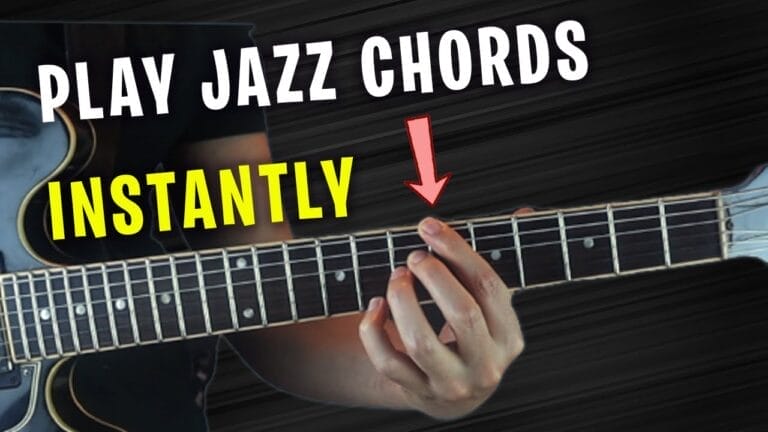
Learn jazz guitar shell voicings that pros actually use. Master root-3rd-7th shapes on all string sets. Stop playing cluttered chords that fight the band.
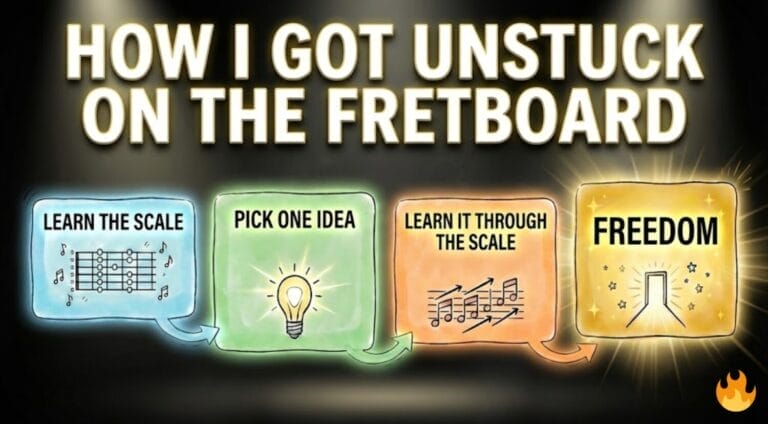
Stop running scales. Learn diatonic movement to create musical ideas that flow naturally through chord changes. Real guitar lesson, not theory fluff.

Learn voice leading on guitar. Stop playing choppy chord changes. Connect Dm7-G7-Cmaj7 smoothly using guide tones. Make jazz standards flow naturally.
Learn to use arpeggios over chord changes with one exercise from Autumn Leaves. Stay in position, target chord tones, hear the fretboard differently.

Learn 4 triad voicing techniques that transform basic C major and D minor chords into professional-sounding progressions. No complex jazz theory required.
If you’re struggling to make your jazz comping sound authentic and professional, the problem likely isn’t your music theory knowledge – it’s that you’re playing overly complex voicings that muddy the harmony and limit your mobility on the neck.
Stop running scales. Learn diatonic movement to create musical ideas that flow naturally through chord changes. Real guitar lesson, not theory fluff.
Master jazz guitar transcription with a proven system. Turn Brecker solos into natural vocabulary. From conscious effort to subconscious fluency.

Stop getting lost on the fretboard. Learn voice leading through chord changes, focus on rhythm over notes, and participate in music instead of just playing over it.
Learn jazz guitar shell voicings that pros actually use. Master root-3rd-7th shapes on all string sets. Stop playing cluttered chords that fight the band.

Learn to build authentic bebop guitar lines using triads and chromatic approach notes. Stop copying licks and start creating your own jazz vocabulary.

6 pro major scale techniques that turn scale runs into actual music. Learn sequences, diatonic triads, arpeggios, and chromatic approaches in E major.

Stop playing predictable pentatonic licks. Learn modern techniques like adding the 9th, fourth intervals, and major 7 arpeggios to make pentatonic solos sound fresh.

Stop playing C major scale like a robot. Learn 16th note groupings and diatonic movement that turn boring scales into musical phrases that actually sound good.
Learn voice leading on guitar. Stop playing choppy chord changes. Connect Dm7-G7-Cmaj7 smoothly using guide tones. Make jazz standards flow naturally.