
10 Important Levels of Major Scale Soloing on Guitar
- Frequently Asked Questions
- How do I use diatonic triads to improve my major scale soloing?
- What’s the difference between playing diatonic arpeggios and add 9 arpeggios in the major scale?
- How can I use chromatic approach notes to connect major scale chord tones?
- Why should I incorporate open strings when soloing in E major?

About Daniel Weiss
Berklee-trained jazz fusion guitarist, Guitar Idol 2016 finalist, and praised by Jordan Rudess (Dream Theater). Daniel has taught over 5,000 students worldwide through his Fretboard Freedom Path method. Learn more
Frequently Asked Questions
How do I use diatonic triads to improve my major scale soloing?
Diatonic triads are three-note chords built from each degree of the major scale, like E major (first degree), F# minor (second degree), and G# minor (third degree) in E major. By targeting these chord tones in your solos, you create stronger harmonic connections and make your improvisation sound more intentional and musical.
What’s the difference between playing diatonic arpeggios and add 9 arpeggios in the major scale?
Diatonic arpeggios use only the three notes of each chord (root, third, fifth), while add 9 arpeggios include a fourth note—the ninth interval above the root, which adds more color and sophistication to your lines. For example, a C major arpeggio is C-E-G, but a C add 9 arpeggio is C-E-G-D, giving you richer harmonic possibilities.
How can I use chromatic approach notes to connect major scale chord tones?
Chromatic approach notes are non-scale tones played between chord tones, like sliding from a flat note up to the third of a chord. This technique adds smooth, professional transitions in your solos and creates interesting tension and release when combined with major scale tones and diatonic arpeggios.
Why should I incorporate open strings when soloing in E major?
Open strings like E and B work perfectly in E major because E is the root and B is the fifth of the E chord, creating a strong tonal foundation. Using open strings alongside fretted notes adds brightness, sustain, and a unique resonance that enhances your overall sound without moving your hand position.
If you’re a guitarist looking to take your playing to the next level, the major scale is an essential tool to have in your musical toolbox. In this post, we’ll explore some key concepts and techniques for Major scale soloing, and offer tips on how to get the most out of this versatile scale.
First, let’s start with the basics. The major scale is a seven-note scale that provides the foundation for much of Western music. It consists of the following intervals: whole, whole, half, whole, whole, whole, half. In the key of E, for example, the major scale would consist of the notes E, F#, G#, A, B, C#, and D#.
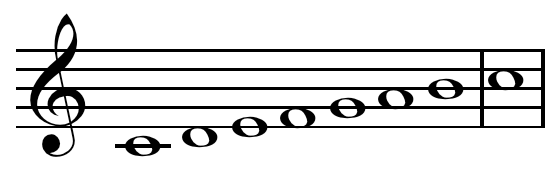
One of the key things to practice when we focus on major scale soloing is playing it in different tonalities and on different strings. This will help you become more familiar with the scale and develop your finger dexterity. You can also try playing the scale in sequence, or starting on different degrees of the scale (such as the third or the fifth).
Another important concept to explore when improvising with the major scale is the diatonic chords and arpeggios within the scale. These are the chords that naturally occur within the scale, and they provide a rich harmonic foundation for your solos. For example, in the key of E, the diatonic chords would be E, F# minor, G# minor, A, B, C# minor, and D# diminished. Practice playing these chords as arpeggios (breaking the chord down into individual notes played in sequence) to get a feel for the harmonic structure of the major scale.
As you become more comfortable with major scale soloing, you can start to experiment with chromatic approaches and movements. These are notes that fall between the chord tones, and they can create tension and interest in your solos. For example, you might try using chromatic approaches to approach the root, third, or fifth of a chord. You can also try using chromatic movements to move between different degrees of the scale.
In addition to working with the diatonic chords and arpeggios within the major scale, don’t be afraid to try out different rhythms and time signatures. Odd time signatures and rhythmic contrasts can add interest and keep your solos fresh. Double stops and triplets are also great techniques to add depth and interest to your playing. Experiment with incorporating these techniques into your solos
