The Art of Composing: Discovering Your Musical Voice
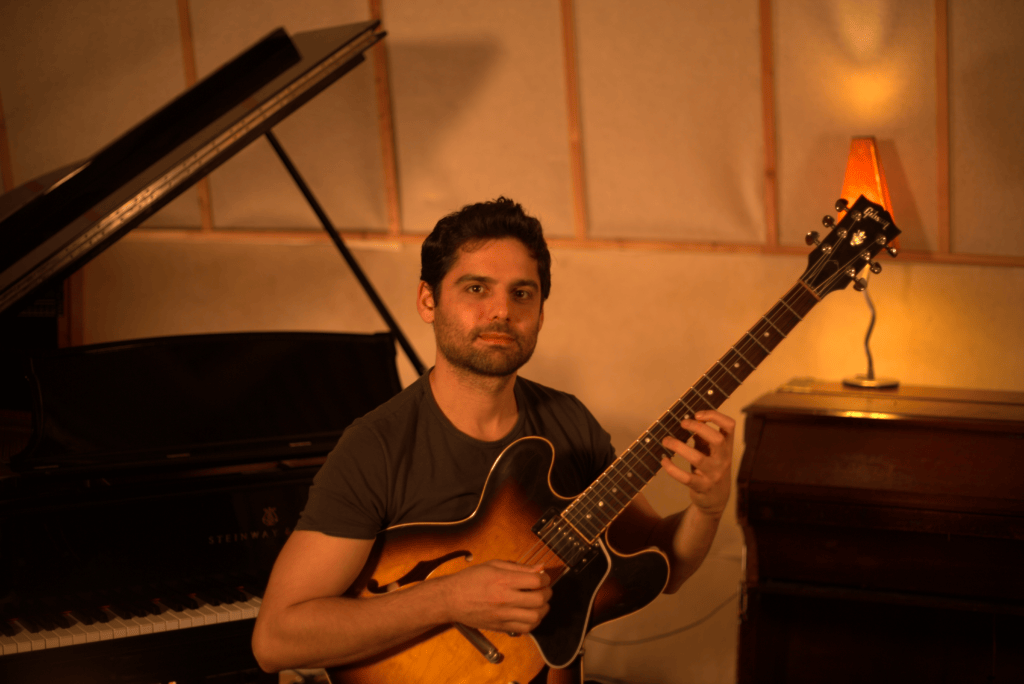
For me, I always had the objective of composing because my dad is a composer. An instrument was just this thing that you sit down and write songs on. Through the years and through all the different places I went and the people I met, the urge to become an improviser, a player, a virtuoso, I guess, emerged. That’s where I found that my identity is to combine the two.
- Introduction: The Art Of Composing
- Embrace Your Musical Heritage:
- Cultivate a Healthy Creative Habit:
- Capture Ideas and Embrace Your Melodies:
- Craft Your Musical Canvas:
- Create Contrast and Arrange Thoughtfully:
- The Power of Collaboration:
- Consistency in Creativity:
- Perfectionism can stifle creativity.
- Conclusion:
Through listening to many different music styles, we find our own taste, and that taste inspires all the fragments and pieces that we later connect into a whole, which is ourselves. Composing, as I said, is an amazing tool to find your own voice. Through the years, composing for different groups and different ensembles, I found a direction and a set of tools that helped me become a more authentic composer. Today, I want to share them with you.
Now, working on my second album, I’m learning that these tools are really becoming more natural. I’m really happy with the process – the authentic, natural process of this second album. If you haven’t checked out my first album, Dive, you can check it out in the description of this video.
Something that really helps me is recording myself singing or humming anything, basically. It can be something that I’m just picking up from my imagination. I can do it right now.
[Music]
That was just a phrase, right? That is something that I can now take and say, “Okay, that’s a melody. It has this character to it, and it’s obviously coming from a wish that has emerged from me listening to a lot of types of music.” I embrace that melody. I feel like this is something I want to put out there, and by embracing myself, I embrace that melody.
Then the next part, after you have melodies, is to find a nice form where all those melodies can come together to form a composition. Now you have the form, and you can do that by using notation software like Sibelius, Finale, or Guitar Pro – just to have a visual representation of where you’re going with your melodies and composition. Or you can simply work on it and record it using Cubase or Logic.
So now you have that picture, right? Maybe you’re taking that melody and experimenting with different harmonies. You have the picture, and now there are a few things you can do. You can ask yourself, “What is this composition meant to be?” So, you’re always keeping that vision in mind – from when the melody first emerged all the way to arranging, orchestrating, and even meeting with the band (which we’ll get into later).
You have a form, even if it’s not perfect. Now you can start creating contrast in your arrangement. That could be a bass line, for example – how does the bass line feel with the melody, and how does the harmony reflect on the melody? Is it giving it the colors that you wanted? If you’re including solo sections, what are they going to be? Will the solo section be over the harmony, or will it be a different part where the solo section brings a different mood? Is the melody going to be played in unison or in different voices? There are so many questions, but all of them come into play after you have the general idea, after you have the actual form and melody.
For more on this, check out the chord progressions.
For me personally, if you don’t have ideas, something you can do is simply start working on treating yourself better. That can be taking walks, changing your diet, exercising, or taking showers – cold showers, hot showers – whatever helps distract you from getting in your own way. Learning other people’s songs or practicing fundamental elements like arpeggios, triads, theory, and voice leading can also help.
For me, it’s a healthy habit to take those ideas and start immediately creating with them – those mini etudes or mini songs, mini tracks. Through them, you discover what you want to say with those materials. Not every idea you document is going to be your next hit, but the fact that you’re putting yourself in a place where creating is a habit is key. Recording yourself singing into a voice message or sending ideas to a musician friend is always good.
I also want to talk about the power of community when composing. Creating that habit is going to allow you to tap into the inner musician-creator and start finding your voice. If you think about all those artists, they each have that one output that they’re really good at. I think it’s good to appreciate each one for their own voice because they had to find it, embrace it, and figure out who they are – and who they are not – so they could start doubling down on who they are.
Whenever I give them a musical piece, I tell them to do whatever they want with it. For example, I never send a drummer pre-programmed drums. I ask, “What do you hear?” From there, I might say, “I love that, do more of that.” Or, “This is really nice, but can you try that?” Rarely will I say something like, “I don’t like that, replace it.” I don’t even remember a time I’ve said that.
That’s my way of creating, but of course, there are other ways. It really depends on what you’re going for and the philosophy behind the way you create, which is just another representation of who you are – and who you are not.
Remember that there are videos of people recording themselves playing over cats or dogs that just touched the piano and created a melody. They put so much arrangement and ideas into it that it actually becomes a pleasant musical piece. Sometimes, just to give you perspective, you already have so many ideas in you, and everyone has ideas in them. The execution part is usually what takes the most effort.
My album Dive was, in a way, neglected – but in a good way. Yaniv and I composed it, arranged it, and when it was time to just go for it, we stepped into the studio, recorded two or three takes per song, and that was it. Then it was time to move on. Of course, then you just focus on putting it out there if that’s what you’re into. Putting your music out is a whole other video.
01 Introduction: The Art Of Composing
Composing is a powerful tool that allows musicians to express their deepest creative desires. It not only helps with improvisation and achieving larger musical goals, but it also allows artists to discover and express the unique sound that resonates within them. As a musician, composer, and improviser, I have personally witnessed the transformative power of composition on my musical journey.
Today, I would like to share the wonders of composing with you, as well as how it has helped me find my musical identity and the steps I take in my creative process.